



Poly(ADP-ribose) Glycohydrolase (PARG)
Poly (ADP-ribose) glycohydrolase (PARG) is the primary hydrolase involved in the degradation of poly(ADP-ribose) (PAR). PARG possesses both endo-glycohydrolase and exo-glycohydrolase activity, preferentially performing the latter by binding to the two most distal ADP-ribose residues within the PAR chain. These different modes of catalysis produce free PAR and mono ADP-ribose moieties, respectively. The free mono ADP-ribose is then metabolized into AMP and ribose 5′ phosphate by ADP-ribose pyrophosphohydrolases such as the NUDIX family. AMP is utilized in ATP reformation and different metabolic and cell signaling pathways while ribose 5′ phosphate is a precursor to many biomolecules including DNA, RNA and ATP. Endo-glycohydrolase activity is considered to occur primarily during hyper-PARP activation, the resulting free PAR chains produced are then implicated in apoptosis acting as a death signal.
All Product Categories
-
Poly(ADP-ribose) Glycohydrolase (PARG) Related Products (27)
Related Products (27)

-
Antibodies (6)
- 1
- 2
-
PDD 00017273
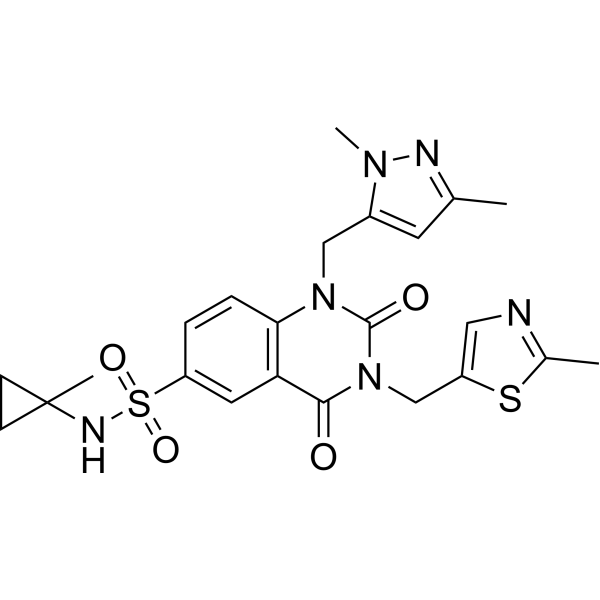 0 ImagesPDD 00017273 is a potent inhibitor of Poly(ADP-ribose) Glycohydrolase (PARG), with an IC50 of 26 nM, and a KD of 1.45 nM.
-
COH34
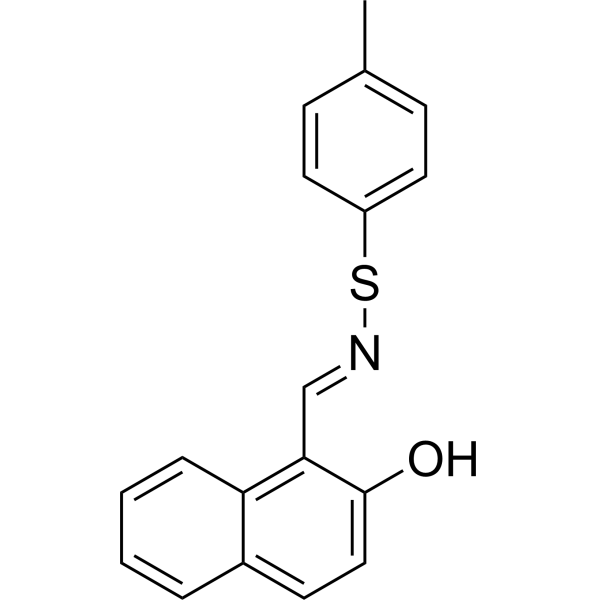 0 ImagesCOH34 is a potent and specific poly(ADP-ribose) glycohydrolase (PARG) inhibitor with an IC50 of 0.37 nM. COH34 binds to the catalytic domain of PARG (Kd=0.547 μM), thereby prolonging PARylation at DNA lesions and trapping DNA repair factors.
-
TFMU-ADPr diammonium
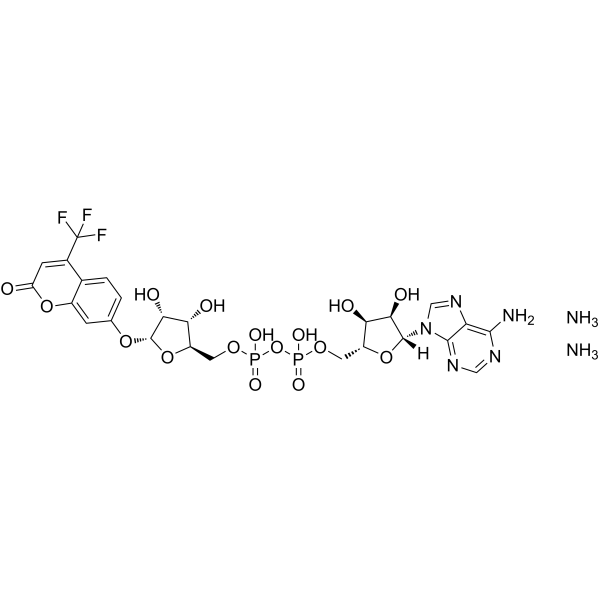 0 ImagesCat. No.: HY-146248BPurity: 98.78%TFMU-ADPr diammonium is a selective reporter substrate of SARS-CoV-2 Macro1 (IC50=0.59 μM), with an excitation wavelength (λEx) of 385 nm, and an emission wavelength (λEm) of 502 nm (or 495 nm). TFMU-ADPr diammonium can also undergo enzymatic hydrolysis with Poly(ADP-ribose) Glycohydrolase (PARG) sourced from human, Tetrahymena thermophila and ADP-ribosylhydrolase 3 from human to release fluorophores, thereby directly reporting total poly (ADP-ribose) hydrolase activity. TFMU-ADPr diammonium binds to the ADPr-binding site of SARS-CoV-2 Macro1, and its TFMU moiety inserts into the narrow hydrophobic groove of this protein. TFMU-ADPr diammonium can thus be used to evaluate small-molecule inhibitors targeting PAR hydrolases under in vitro conditions, to investigate the regulatory mechanisms of ADP-ribosyl catabolic enzymes, or to detect PAR hydrolase activity in whole-cell lysate assays. TFMU-ADPr diammonium is also applicable to COVID-19-related research.
-
PDD00017272
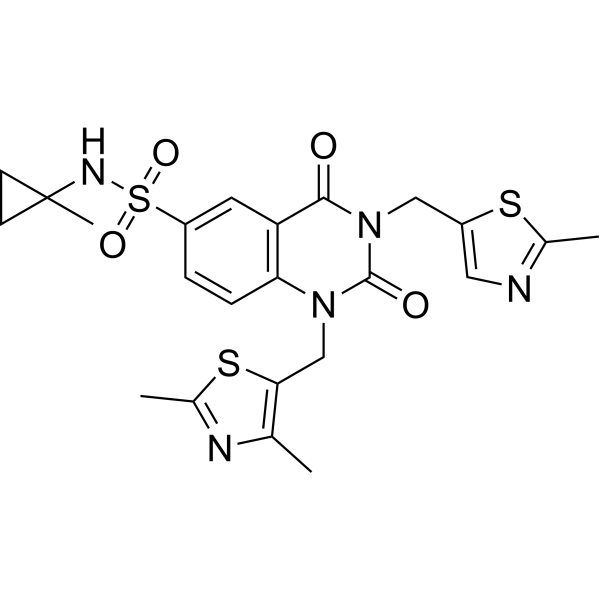 0 ImagesPDD00017272 is an inhibitor of poly(ADP-ribose) glycohydrolase (PARG) (EC50=4.8 nM) and an activator of PARP1/2. PDD00017272 inhibits its activity of hydrolyzing poly(ADP-ribose) (pADPr), resulting in the accumulation of pADPr on chromatin, interfering with DNA damage repair and replication processes, and inducing PARP1/2-dependent cytotoxicity. PDD00017272 can be used in cancer models with DNA repair defects (such as BRCA mutations) or resistance to PARP inhibitors. PDD00017272 has a PARG expression level-correlated inhibitory potency with EC50 of 9.2 nM (PARG cells), the tumor cells with lower PARG expression are more sensitive.
-
Endo-1,4-β-xylanase
 0 ImagesEndo-1,4-β-xylanase (Xylanase) is an arabinoxylan (AX) degrading enzyme and a glycoside hydrolase, is often used in biochemical studies. Endo-1,4-β-xylanase cleaves the β-xylosidic bond between two d-xylopyranosyl residues linked in β-(1,4).
-
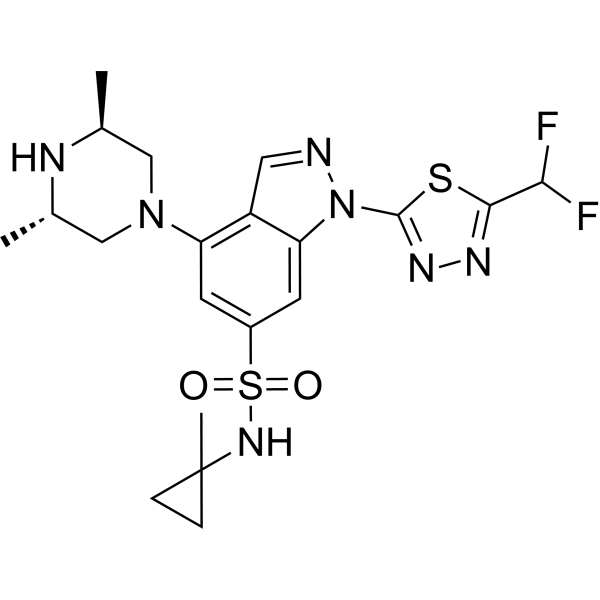
Gatuzosiran sodium scrambled negative control
 0 ImagesCat. No.: HY-177634BGatuzosiran sodium scrambled negative control is the sequence scrambled negative control of Gatuzosiran sodium.
-
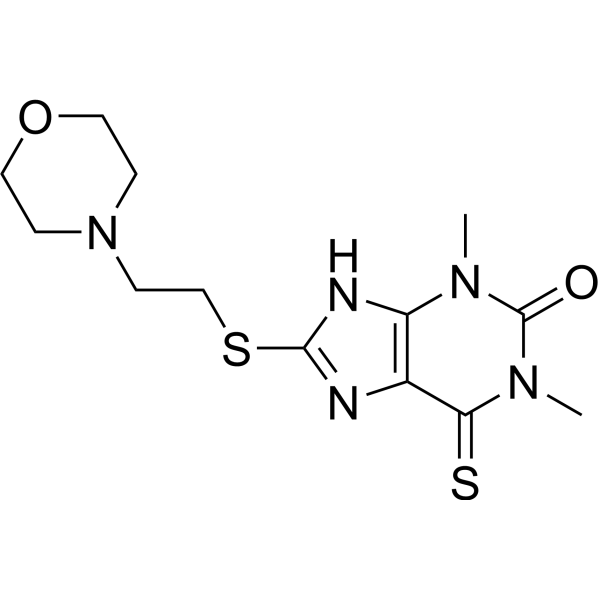
MDOLL-0286
 0 ImagesCat. No.: HY-178208Purity: 99.66%MDOLL-0286 is a selective Poly(ADP-ribose) Glycohydrolase (PARG) (ARH3) inhibitor with an IC50 of 2.3μM. MDOLL-0286 can inhibit ARH3’s poly-ADP-ribose hydrolytic activity on cellular substrates. MDOLL-0286 can inhibit DNA damage response. MDOLL-0286 can be used for the research of cancer .
-
PDD00017238
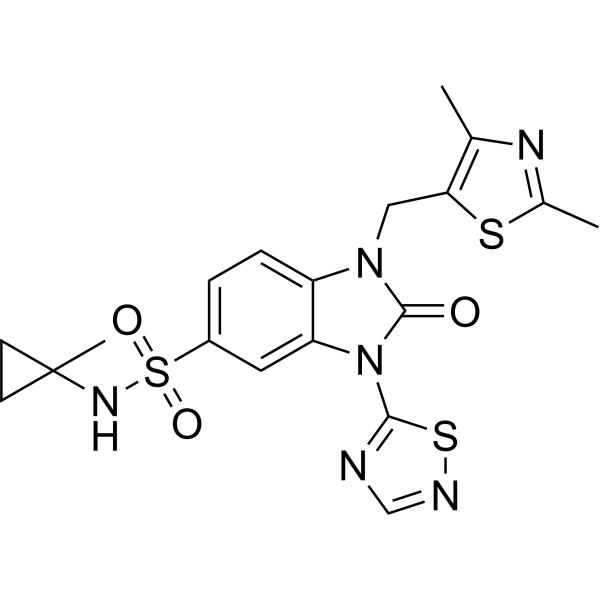 0 ImagesPDD00017238 is a potent inhibitor of Poly(ADP-ribose) Glycohydrolase (PARG), with EC50 values of 40 nM and 55 nM in biochemical assay and cell POM, respectively.
-
pNP-ADPr disodium
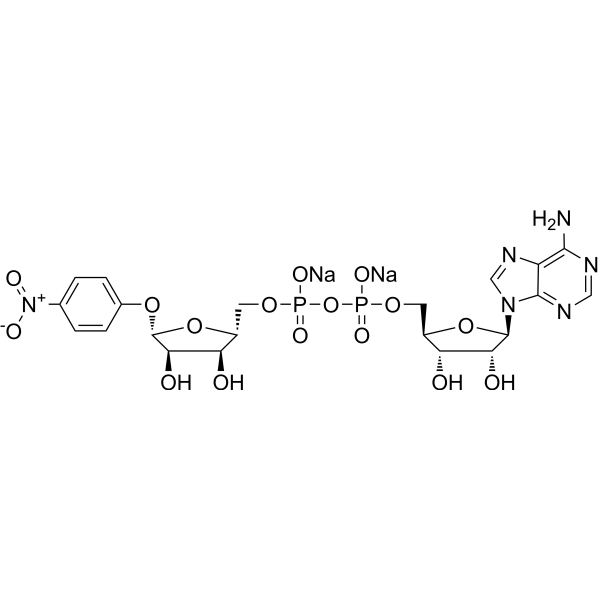 0 ImagesCat. No.: HY-134354APurity: 98.08%Synonyms: ADP-ribose-pNP disodium

-
iso-ADP ribose TEA
 0 ImagesCat. No.: HY-135782APurity: 99.97%iso-ADP ribose TEA is the small-molecule ligand for protein nucleic acid modification, comprising parts of two consecutive ADP-ribosyl units within the PAR chain. iso-ADP ribose TEA specifically binds WWE, FHA and OB-fold domains, enabling PAR-dependent functional responses like ubiquitylation and supporting DNA damage signaling and repair. iso-ADP ribose TEA can be used for cancer research.
-
Ethacridine
 0 ImagesEthacridine is a poly(ADP-ribose) glycohydrolase (PARG) inhibitor and an activator of the transcriptional coactivator. Ethacridine induces thyroid cancer cells apoptosis and promotes differentiation in thyroid follicular cells.
-
PDD00031705
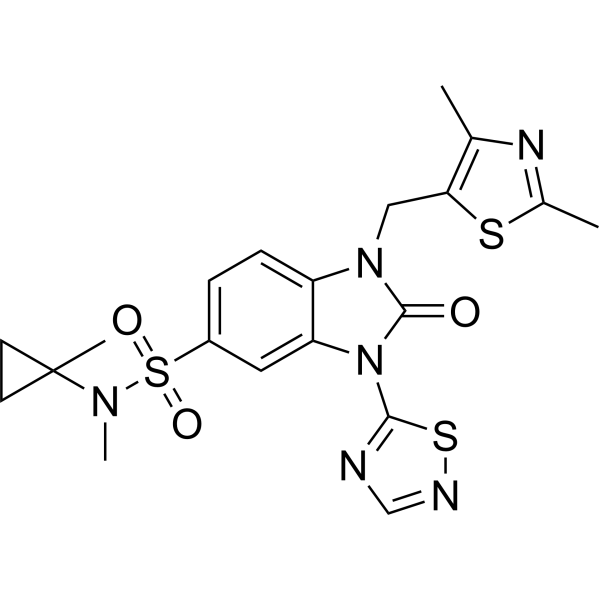 0 ImagesPDD00031705 is a benzimidazolone core cell-inactive inhibitor of Poly (ADP-ribose) glycohydrolase (PARG).
-
FORX-428
 0 ImagesFORX-428 is an orally active, selective poly (ADP-ribose) glycohydrolase (PARG) inhibitor. FORX-428 reversibly inhibits PARG, thereby blocking PAR chain dissociation, inhibiting DNA repair, inducing tumor cell death, and targeting replication stress in cancer cells. FORX-428 can be used in the research of ovarian cancer and triple-negative breast cancer.
-
iso-ADP ribose
 0 ImagesCat. No.: HY-135782CAS No.: 15720-01-1iso-ADP ribose is the small-molecule ligand for protein nucleic acid modification, comprising parts of two consecutive ADP-ribosyl units within the PAR chain. iso-ADP ribose specifically binds WWE, FHA and OB-fold domains, enabling PAR-dependent functional responses like ubiquitylation and supporting DNA damage signaling and repair. iso-ADP ribose can be used for cancer research.
-
COH34 analog 1
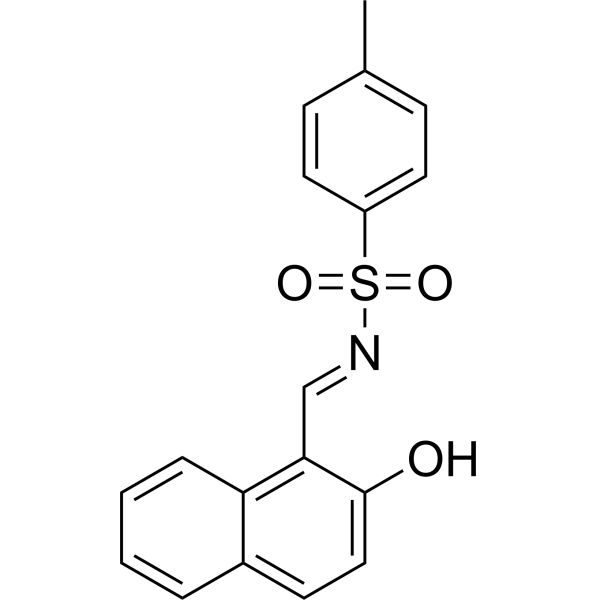 0 ImagesCOH34 analog 1, a metabolite, is an oxidized analog of COH34. COH34 is a potent poly(ADP-ribose) glycohydrolase (PARG) inhibitor.
-
TFMU-ADPr triethylamine
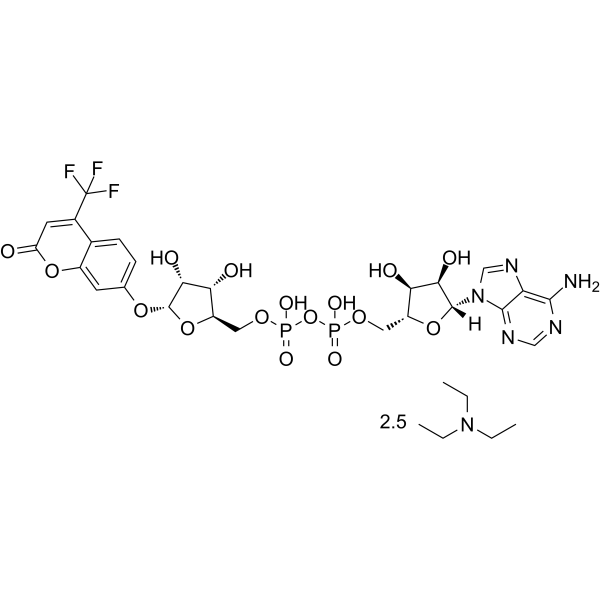 0 ImagesCat. No.: HY-146248ATFMU-ADPr triethylamine is a selective reporter substrate of SARS-CoV-2 Macro1 (IC50=0.59 μM), with an excitation wavelength (λEx) of 385 nm, and an emission wavelength (λEm) of 502 nm (or 495 nm). TFMU-ADPr triethylamine can also undergo enzymatic hydrolysis with Poly(ADP-ribose) Glycohydrolase (PARG) sourced from human, Tetrahymena thermophila and ADP-ribosylhydrolase 3 from human to release fluorophores, thereby directly reporting total poly (ADP-ribose) hydrolase activity. TFMU-ADPr triethylamine binds to the ADPr-binding site of SARS-CoV-2 Macro1, and its TFMU moiety inserts into the narrow hydrophobic groove of this protein. TFMU-ADPr triethylamine can thus be used to evaluate small-molecule inhibitors targeting PAR hydrolases under in vitro conditions, to investigate the regulatory mechanisms of ADP-ribosyl catabolic enzymes, or to detect PAR hydrolase activity in whole-cell lysate assays. TFMU-ADPr triethylamine is also applicable to COVID-19-related research.
-
PARG-IN-7
 0 ImagesCat. No.: HY-171789CAS No.: 2632343-19-0PARG-IN-7 (Example 38) is a Poly ADP-ribose glycohydrolase (PARG) inhibitor (IC50: < 0.1 μM). PARG-IN-7 inhibits cell viability of HCC1806-XRCC1 KD (knock down) cells with an IC50 < 1 μM. PARG-IN-7 can be used for cancer research.
- 1
- 2




